How to Validate Product Demand Before You Launch
Learn how to validate product demand before launching on TikTok Shop, using the same revenue, trend, and creator-conversion signals real operators track.

How to Validate Product Demand Before You Launch (Step-by-Step, 2026)
You validate product demand by checking real sales signals before you spend a dollar: revenue level and trend direction, creator (or seller) conversion rate, market saturation (how many creators or sellers are already competing), commission or margin, product rating, and how easy the product is to demonstrate in short-form video. Revenue alone does not validate demand — a product can have huge lifetime revenue and still be a bad bet if the trend is declining and thousands of creators are already competing for what's left. The strongest validated opportunities combine a rising trend with real (not tiny) revenue and low creator saturation.
Key Takeaways
- Demand is validated by trend direction and creator saturation, not by how much total revenue a product has generated historically.
- A product can be the single highest-revenue item in a dataset and still be a bad launch — if the trend is falling and the category is oversaturated.
- Rising trend combined with low creator/seller saturation is one of the strongest early signals of an under-exploited opportunity.
- A sudden, uncapped trend spike (revenue exploding off a near-zero base) validates demand differently than steady growth on an already-large base — both are real, but they carry different risk profiles.
- Products with a rating below roughly 4.0, a creator conversion ratio near zero, or a commission under 8–10% carry outsized risk relative to their apparent popularity.
What Does It Mean to "Validate" Product Demand?
Validating product demand means confirming — with real sales data, not intuition — that a product is currently selling, that the trend is moving in the right direction, and that there is still room for a new seller or creator to compete. It is different from simply noticing that a product is popular. A product can be everywhere on your feed because thousands of sellers are already pushing it, which often means the early, easy profit has already been captured.
For TikTok Shop and similar social-commerce channels, validation usually means checking four things together: tracked revenue, the revenue growth trend, how many creators are actively promoting the product, and what share of those creators actually drive a sale (the creator conversion ratio). No single number tells the whole story — a product with huge revenue and a collapsing trend is a very different opportunity than a product with modest revenue and an accelerating trend.
Why Demand Validation Matters More Than Revenue Rank
Revenue rank is the most commonly misread signal in product research. It answers "how much has this sold, ever" — not "is this still winning." A product can rank first on total revenue while its trend is falling and thousands of creators are already competing for the remaining demand. Chasing that product means entering a shrinking market against an already-saturated creator base.
In a recent 95-product Kalodata pull, the two single highest-revenue products in the dataset were both declining — one down 10%, the other down more than 53% — while each carried well over 6,000 competing creators. Meanwhile, a mid-revenue product with a fraction of that lifetime total was posting a nearly 580% trend increase with only a few hundred creators attached. Revenue size told the wrong story; trend and saturation told the true one.
Every week, The Operator Signal runs this exact validation process on a fresh Kalodata pull and publishes a free preview with one featured winner and the full eliminations list — no signup required to read it.
The Product Demand Validation Framework
Score every candidate product against these eight signals before deciding to test it. Weight them in roughly this order — revenue growth first, fulfillment risk last:
1. Revenue Level and Trend Direction
Revenue level shows a product can sell at all. Trend direction shows whether that demand is growing or fading right now. A product with modest revenue and a strongly positive trend is usually a better validated opportunity than a product with huge revenue and a negative trend — the first is compounding, the second is running out.
2. Creator (or Seller) Conversion Ratio
This measures what share of the people promoting a product actually generate a sale. A high conversion ratio means the content is doing real work — viewers are being convinced, not just exposed. A low ratio on high creator volume can mean the product looks trendy but doesn't actually convert attention into purchases.
3. Saturation (How Many Creators or Sellers Are Already Competing)
Saturation is the most overlooked half of demand validation. A rising trend with thousands of creators already attached means the opportunity is likely already captured by early movers. A rising trend with a low creator count means the demand curve is outrunning the competition — exactly the gap a new operator wants to find.
4. Commission or Margin
A product can have perfect demand signals and still be a poor economic bet if the commission or margin is too thin to support paid acquisition. Always calculate the dollar payout per sale (price × commission rate), not just the percentage — a lower percentage on a higher-priced item can still out-earn a higher percentage on a cheap one.
5. Product Rating
Rating is a proxy for return and refund risk. A rating below roughly 4.0 usually signals a real quality or fit problem that will show up later as customer-service load and refund costs, even if the sales numbers look attractive today.
6. Price Point and Impulse-Buy Viability
Lower-priced products (roughly under $30–40) tend to convert on impulse with less need for extended consideration; higher-priced products need stronger proof and trust-building content but can carry more attractive per-sale economics.
7. Content and Demonstration Potential
Can the product be shown solving a problem in under 30 seconds, ideally without sound? Products with a visible before/after, a satisfying use motion, or an obvious problem-solution format validate faster because creators can prove the value quickly.
8. Fulfillment Risk
Large, heavy, battery-powered, or fragile items carry higher shipping cost, damage risk, and return rates. A product can pass every demand signal and still be a poor launch choice if fulfillment risk erodes the margin.
Dataset-Based Example: Reading Real Signals
The table below is drawn from Operator Signal's Issue 14 Kalodata pull (Aug 16, 2026) and illustrates the difference between validated demand and a misleading revenue number.
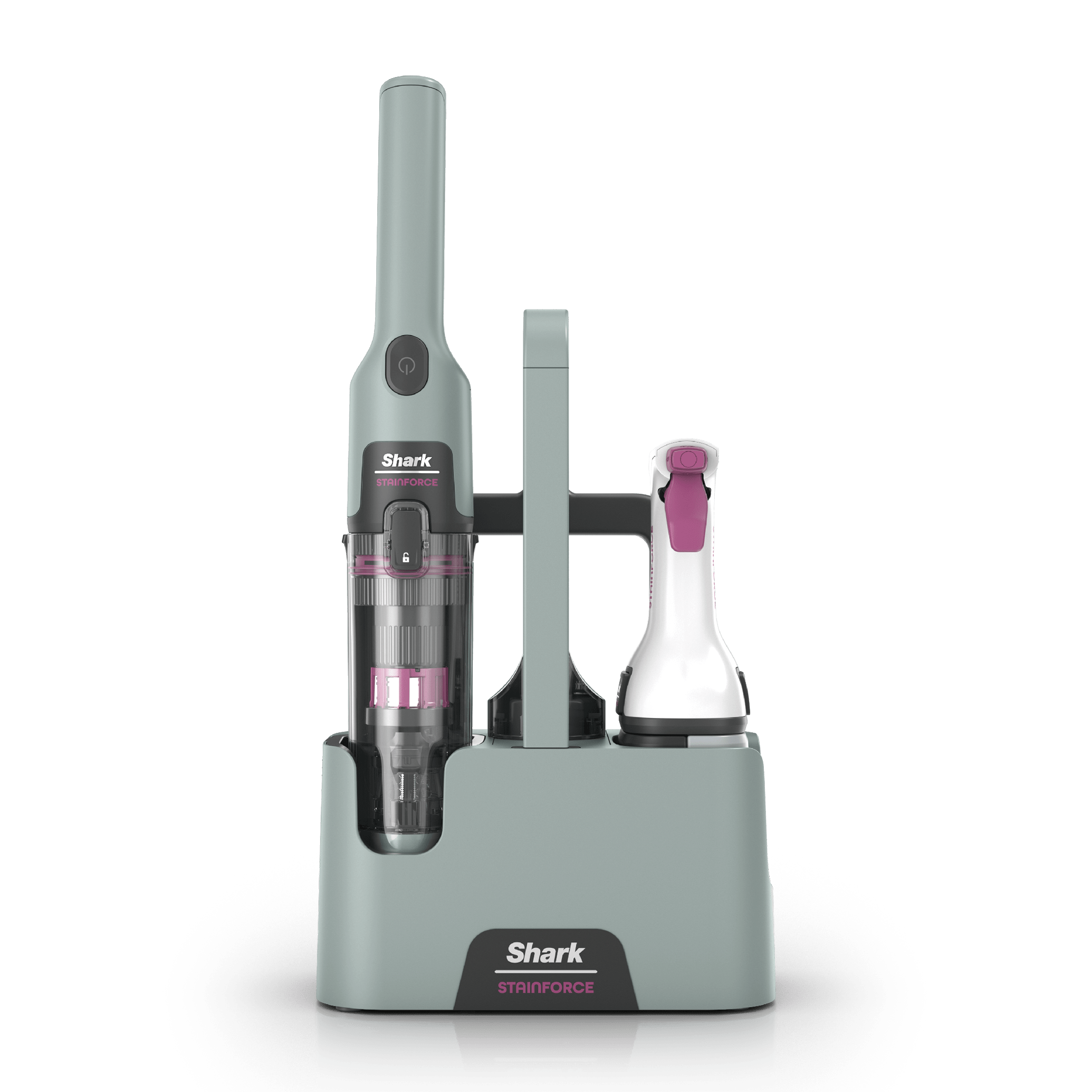
Validated demand: Shark StainForce Cordless Stain Cleaner
$1.12M in revenue, trending ▲579.5%, with only 532 creators currently promoting it. This combination — real revenue, a sharp positive trend, and low saturation — is what validated demand looks like. The revenue isn't the biggest in the dataset, but the direction and the room to compete both check out.

Misleading revenue: Toplux Magnesium Complex
$2.47M in lifetime revenue — the single highest of any product in the dataset — but trending ▼10% with 6,091 competing creators already attached. On revenue rank alone, this looks like the best product in the pull. On validated demand, it's an elimination: the trend is negative and the category is heavily saturated.
Full analysis, the complete Top 5 and Eliminations lists, and the Launch Pick breakdown are available in the paid edition of Issue 14.
Signal vs. Hype: A Comparison
| Signal | What It Actually Confirms | Common Misread |
|---|---|---|
| High lifetime revenue | The product has sold before, at some point | Assuming it is still selling now — check the trend, not just the total |
| Trending on your feed | Content about the product is circulating | Assuming this means low competition — high visibility often means high saturation |
| Rising trend % | Recent revenue is accelerating | Ignoring the base it's growing from — a spike off near-zero behaves differently than growth on an already-large base |
| High creator count | Many creators have chosen to promote it | Reading this as pure validation instead of also a saturation warning |
| High star rating | Buyers who received the product were satisfied | Assuming a good rating offsets a stockout — a 4.8 rating means nothing if the trend line shows the listing has stopped selling |
Step-by-Step: Validating a Product's Demand
- Pull recent sales data for the product — revenue level, trend percentage, and daily figures if available, not just a lifetime total.
- Check the trend direction first. A declining trend disqualifies a product from consideration regardless of how large the revenue number looks.
- Check creator or seller saturation. A high creator count on a still-rising trend is a warning sign that the window may be closing.
- Calculate the creator conversion ratio if available — this tells you whether promotion is actually converting to sales.
- Calculate dollar-per-sale economics (price × commission or margin rate) rather than relying on the percentage alone.
- Screen for red flags — a rating under 4.0, a near-zero conversion ratio on a small creator base, or several consecutive days of $0 in the daily revenue data (often a stockout or delisting signal).
- Test small before scaling. Even a fully validated product should be tested with organic content and a small creator batch before committing paid spend.
Common Mistakes When "Validating" Demand
- Sorting only by revenue. The highest-revenue product in a dataset is frequently not the best current opportunity — check the trend and creator saturation before anything else.
- Ignoring the base a trend spike is growing from. A percentage increase off a tiny starting revenue base can look identical on paper to growth on a large base, but the two carry very different risk profiles.
- Treating a good rating as proof of active demand. A product can hold a great rating while its sales have effectively stopped — always check the trend, not just the review score.
- Skipping the creator conversion ratio. A high creator count with a low conversion ratio often means a product is widely promoted but not actually converting.
- Launching on trend alone without checking fulfillment risk. Heavy, fragile, or battery-powered products can validate perfectly on demand signals and still be a poor launch choice.
Expert Tips for Faster, More Reliable Validation
- Always look at trend and saturation together — neither one is meaningful alone. A rising trend with high saturation and a flat trend with low saturation are both weaker signals than a rising trend with low saturation.
- Treat an uncapped or extreme trend spike (a product going from near-zero to real revenue in a short window) as a distinct category from steady growth on an established product — validate the former with a smaller initial test given the shorter track record.
- Build a simple weekly habit of pulling fresh data rather than relying on a single snapshot — demand validation is a moving target, and creator counts especially can shift within weeks.
- Keep a running "eliminated" list, not just a "winners" list — knowing what to avoid and why is just as valuable as knowing what to test.
Costs, Risks, and Who Should Avoid This Approach
Data-driven demand validation takes time to learn and requires access to a reliable sales-data source — free guesswork or trend-chasing based on your own feed is faster but far less reliable. Operators who are not willing to test small before scaling, or who chase every trending product without screening for saturation and fulfillment risk, will get inconsistent results even with good data. This approach is best suited to sellers and creators who can commit to a repeatable weekly research habit rather than a one-time product pick.
Final Decision Guide
If a product shows a rising trend, real (not negligible) revenue, low-to-moderate creator saturation, a rating above 4.0, and dollar-per-sale economics that support your acquisition costs — it has validated demand and is worth testing small. If any one of those is clearly failing — a falling trend, an oversaturated creator base, a sub-4.0 rating, or a near-zero conversion ratio — treat that as a disqualifier regardless of how attractive the revenue total looks.
Frequently Asked Questions
What is the single best signal for validating product demand?
There isn't one. Trend direction and creator saturation together are the strongest combination — a rising trend with low saturation is the clearest sign of a real, still-open opportunity.
Can a product have high revenue and still be a bad opportunity?
Yes. A product can be the highest-revenue item in an entire dataset and still be an elimination if its trend is declining and thousands of creators are already competing for what demand remains.
How many creators or sellers is "too saturated"?
There's no fixed number — it depends on the category and the trend. What matters is the ratio: a rising trend with a low creator count relative to revenue is a strong signal; the same trend with several thousand creators already attached is a weaker one.
What does creator conversion ratio actually measure?
It measures what share of creators promoting a product generate an actual sale. A high ratio means the content is genuinely persuasive; a low ratio on high creator volume often means visibility without real conversion.
Is a rising trend percentage always a good sign?
Usually, but check the base it's rising from. A product going from near-zero to modest revenue can post an extreme percentage increase that looks similar to strong growth on an already-large base — both are real signals, but they carry different levels of proof and risk.
Should I ignore products with high revenue but a declining trend?
Not necessarily ignore, but treat them with caution. A declining trend on high revenue usually means the opportunity has already been captured by earlier movers — it disqualifies a product from a "winner" pick even if the revenue number is the largest in a dataset.
How often should I re-check demand data?
Weekly is a reasonable minimum for fast-moving social-commerce categories. Creator counts and trend direction can shift meaningfully within a single week.
Does a high product rating mean demand is validated?
No. A rating reflects satisfaction among people who already bought the product — it says nothing about whether the product is currently selling. Always check the trend and recent revenue data alongside the rating.
What's the fastest way to start validating demand without building my own dataset?
Use an existing weekly analysis that already applies this framework to fresh data — The Operator Signal publishes a free preview every week with one featured winner and the full eliminations list.
Conclusion
Validating product demand is not about finding the product with the biggest revenue number — it's about confirming that the demand is real, current, and still has room for a new operator to compete. Trend direction and creator saturation, checked together, are the two signals that separate a genuinely validated opportunity from a number that only looks impressive on the surface. Build the habit of checking both before every launch decision, and treat revenue rank as a starting point for research, never as the final answer.
Want this analysis done for you every week? Paid subscribers to The Operator Signal get the full Top 5 winners, five eliminations, a ranked Top 10, one launch pick, ad angles, and a 3-day launch plan — built from a fresh Kalodata pull every week.


